Understanding Vending Coffee Machine Price and Real Value
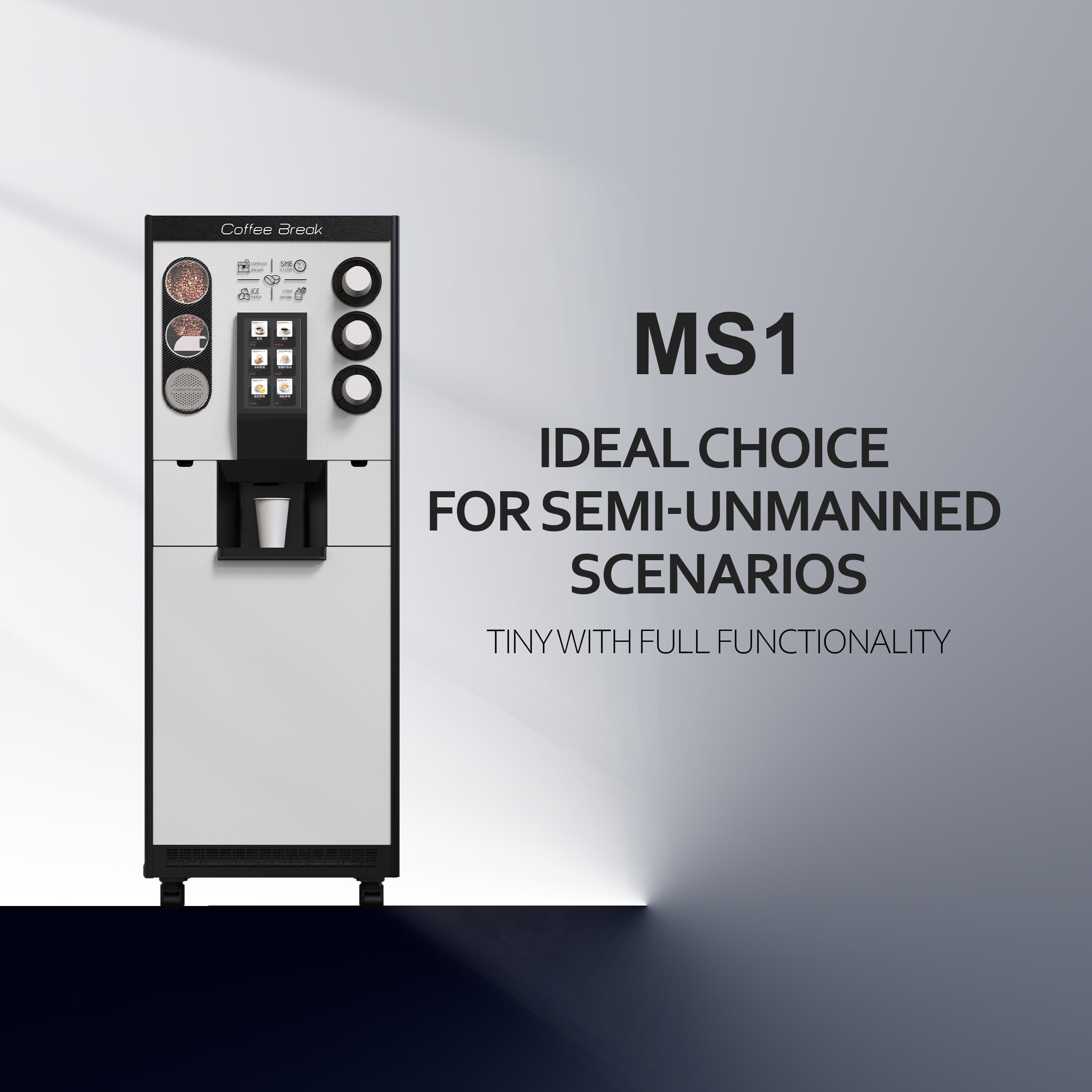
After advising hundreds of business owners on beverage equipment investments, I have found that many buyers only focus on the upfront vending coffee machine price while ignoring long-term returns. A good commercial coffee vending machine brings steady income rather than being a simple cost. Hebei Langlichen Electronic Technology Co., Ltd. is a professional enterprise integrating research and development, production and sales of commercial self-service coffee machines. Its mainstream models include MS1, MR1-14B-A, MG1-14BC-A and MB1-16BN-A. These machines have complete international certifications and independent core modules, and their quality and stability are far beyond ordinary machines. When evaluating prices, we should not only look at the number on the label, but also combine service life, maintenance cost and income-generating capacity to judge the real value of the equipment.
Calculating Coffee Vending Machine ROI for Smart Investment
Coffee vending machine ROI is the core indicator to measure whether the investment is cost-effective, and it needs to combine income and all costs to calculate. According to industry operation data, a high-quality coffee vending machine can achieve ideal return cycle in 8 to 12 months. The products of Hebei Langlichen Electronic Technology Co., Ltd. are equipped with SMB intelligent extraction system and 53mm large-diameter brewing chamber, which can make coffee with the same taste as professional shops. The nitrogen module keeps beans fresh for a long time, and the brewing module is maintenance-free for 50,000 cups. These advantages reduce raw material waste and maintenance times, directly improve the stability of income. In actual operation, the more drinks sold and the lower the failure rate, the higher the actual ROI level.
Total Cost of Ownership Beyond the Initial Price
Total cost of ownership includes purchase cost, maintenance cost, energy consumption, consumables and labor cost in the whole life cycle. Many buyers suffer losses because they only look at the low price and ignore the later expenses. The commercial coffee vending machines produced by Hebei Langlichen Electronic Technology Co., Ltd. have a long service life of up to 300,000 cups. The fresh milk module supports CIP automatic cleaning, and the ice-making module uses environmentally friendly refrigerant with low energy consumption. The IoT coffee machine function supports remote monitoring, fault early warning and parameter adjustment, which greatly reduces on-site maintenance time and labor input. Calculated by the full life cycle, the total cost of ownership of these devices is much lower than that of ordinary machines.
New vs Leased Vending Machines: Which Choice Is More Cost-Effective
The comparison between new vs leased vending machines is a common confusion for investors. Leasing has low upfront cost and is suitable for short-term test sites, but long-term use will produce continuous rental expenses and less profit space. Buying new equipment belongs to its own assets, and has higher coffee vending machine ROI in the long run. Hebei Langlichen Electronic Technology Co., Ltd. provides a full set of support including certification, language customization and voltage adaptation. Models such as MR1-14B-A with dual cup system and MG1-14BC-A with automatic capping are suitable for high-traffic scenes. For long-term and stable operation sites, choosing to buy new machines is more cost-effective than leasing.
IoT Coffee Machine: Boosting ROI and Reducing Operating Costs
The IoT coffee machine is an important tool to improve operation efficiency and reduce total cost of ownership. The intelligent coffee vending machines of Hebei Langlichen Electronic Technology Co., Ltd. can realize remote data monitoring, sales statistics and fault diagnosis. Operators can grasp the operation status at any time without frequent on-site inspections. The equipment supports a variety of payment methods and recipe updates, and can adjust products according to sales data to improve sales volume. The combination of intelligent technology and stable hardware makes the operation more convenient, further enhances the income capacity and extends the service life, helping investors get higher returns with lower comprehensive costs.

 Hot News
 EN
EN